
How to analyze roll center and more
With the roll center analysis feature, you can see where the roll center is positioned both when the suspension is still and during its operation. This provides a comprehensive view of its movement.
Contents
- Select the type of vehicle
- Sync report parameters
- Show roll center relative to chassis position
- Suspension leverage
- Bump steer
- Steering arm length
- Camber gain
- Scrub radius
Select the type of vehicle

You can set the range of the suspension by selecting a vehicle type. For example, “Race” tests the suspension with up to 3 degrees of body roll, whereas “Off Road” tests up to 9 degrees.
Sync report parameters
You can set the range of the suspension by selecting a vehicle type. For example, “Race” tests the suspension with up to 3 degrees of body roll, whereas “Off Road” tests up to 9 degrees. This will adjust the range of the report graph to match the vehicle type.
“Sync reports” is only available when you have reports displayed within the calculator.
Show roll center relative to chassis position
If you prefer to see the roll center analysis relative to the chassis position instead of the ground, make that selection in the options. This will allow you to view the position of the roll center as it moves in relation to the chassis. This will give you a different perspective on the roll center movement as the suspension operates.
Suspension leverage
When selecting a coil rate for your springs, the ultimate goal is to achieve the correct wheel rate and the only way to calculate the wheel rate is to know the suspension leverage. The suspension leverage is different for every car, so you cannot rely on selecting a coil rate based on the experience of a friend or competitor.
Suspension leverage is the difference the wheel travels vertically and the spring length changes along its length. The suspension leverage can change as the suspension moves giving you rising rate or falling rate characteristics which can be desirable or detrimental depending on your use.
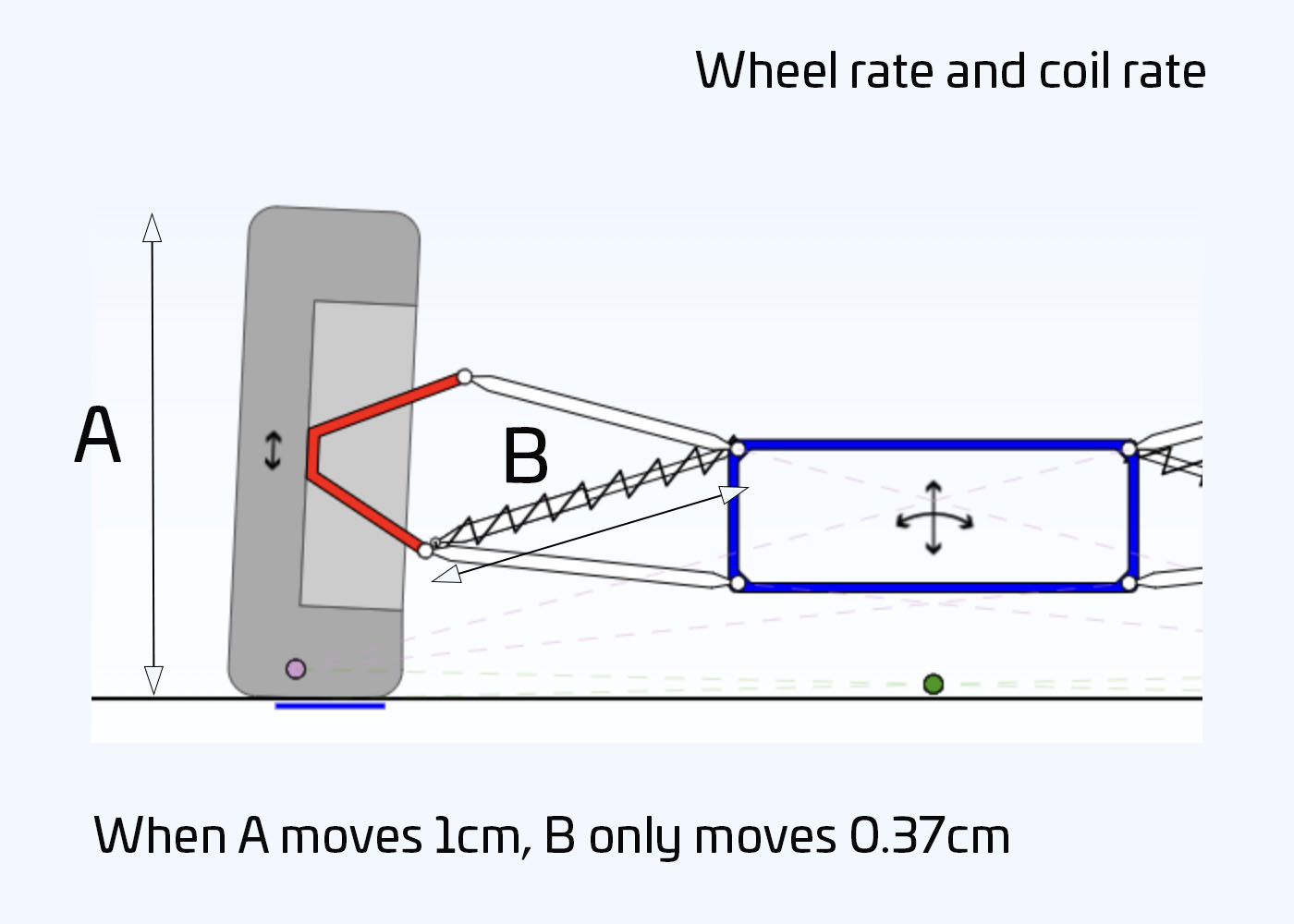
In most case you would want flat on rising rate suspension so the wheel rate is maintained or increases during body roll.
Please read https://www.racingaspirations.com/what-is-wheel-rate/ for more information.
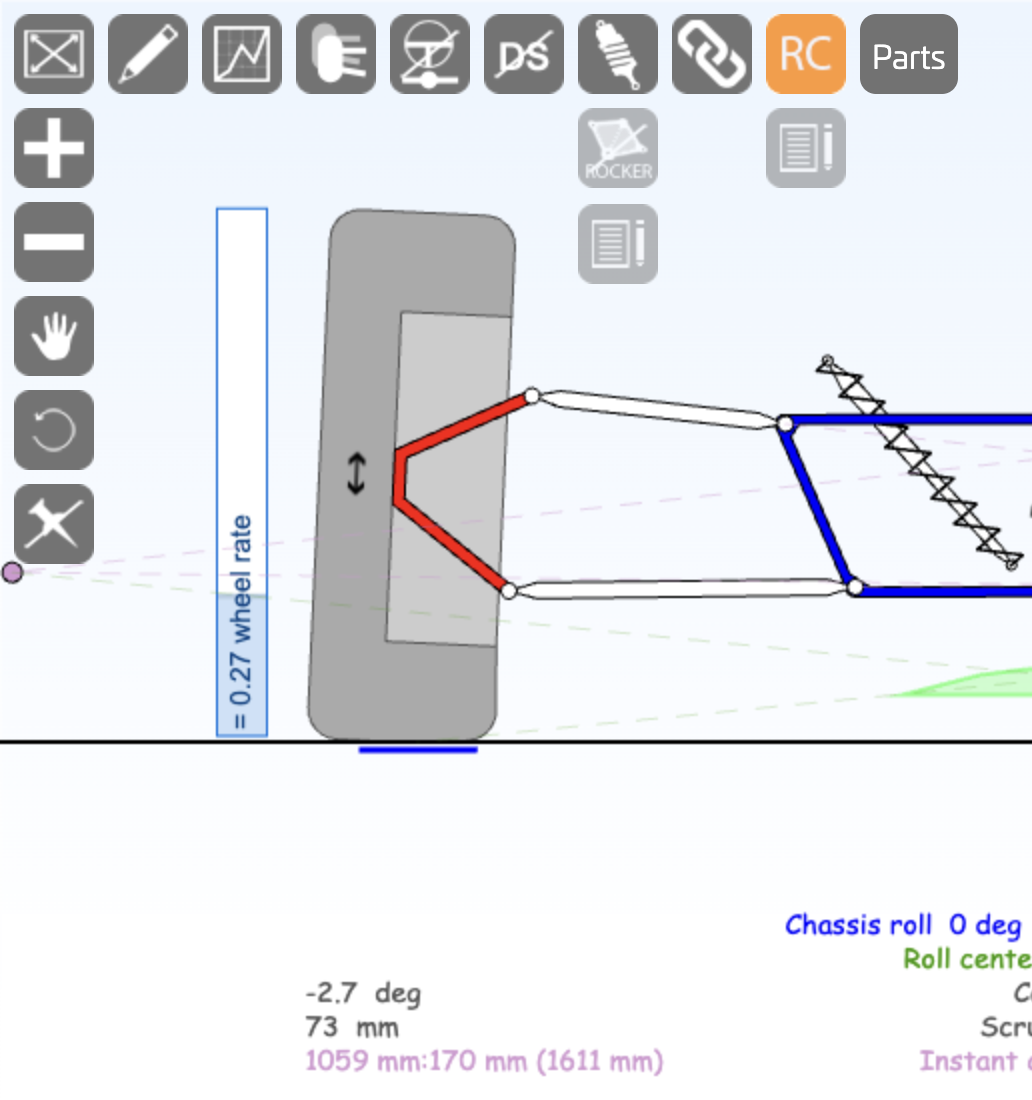
You can visualise the suspension leverage and its range as bar next to the wheel on the calculator. The value can be expressed as a fraction or as the actual wheel rate if you enter your coil rate into the roll centre analysis edit form.
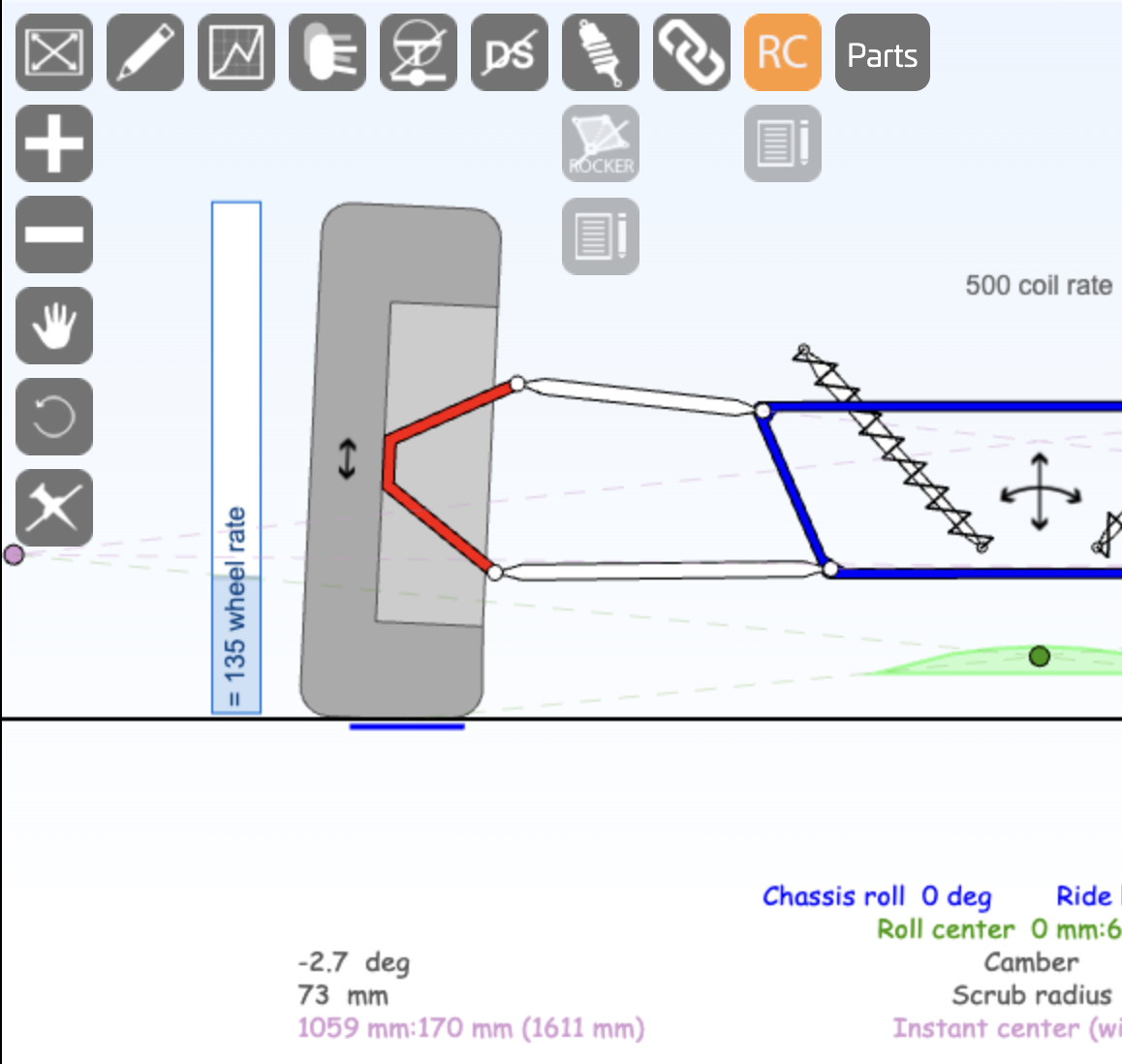
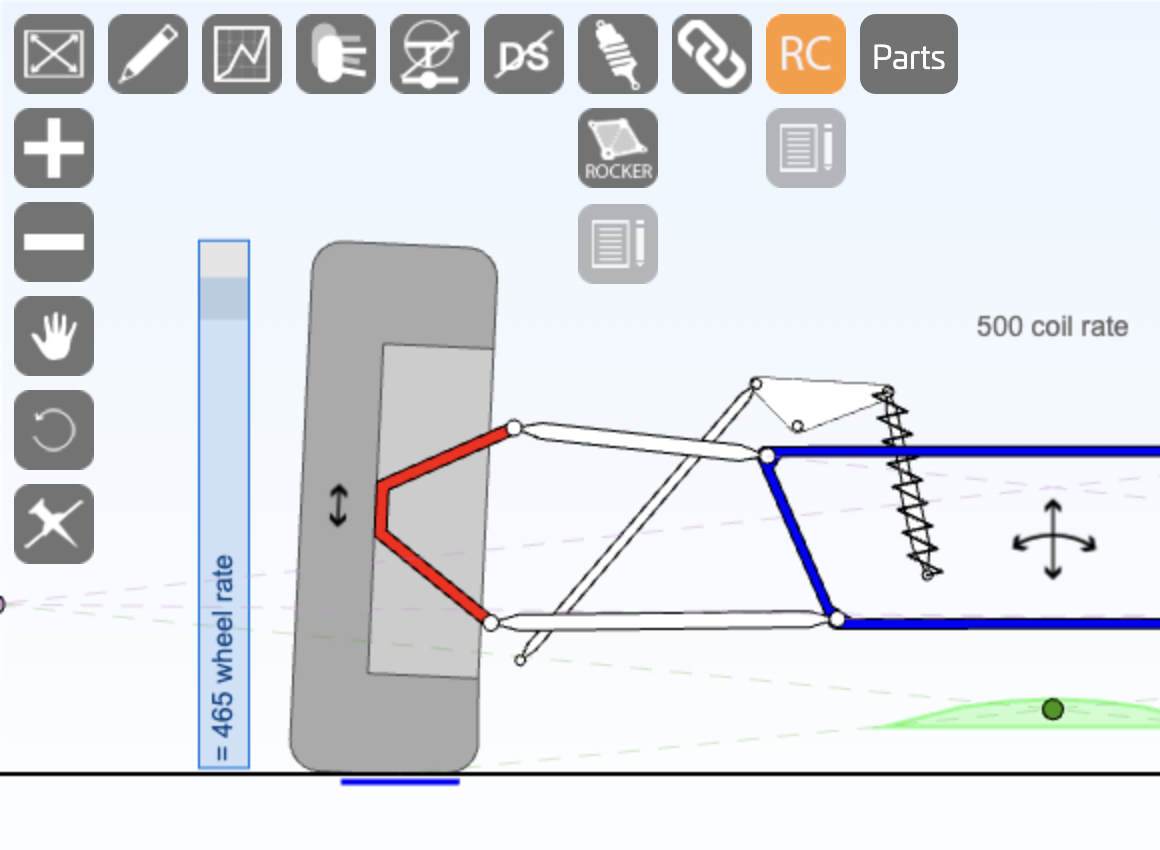
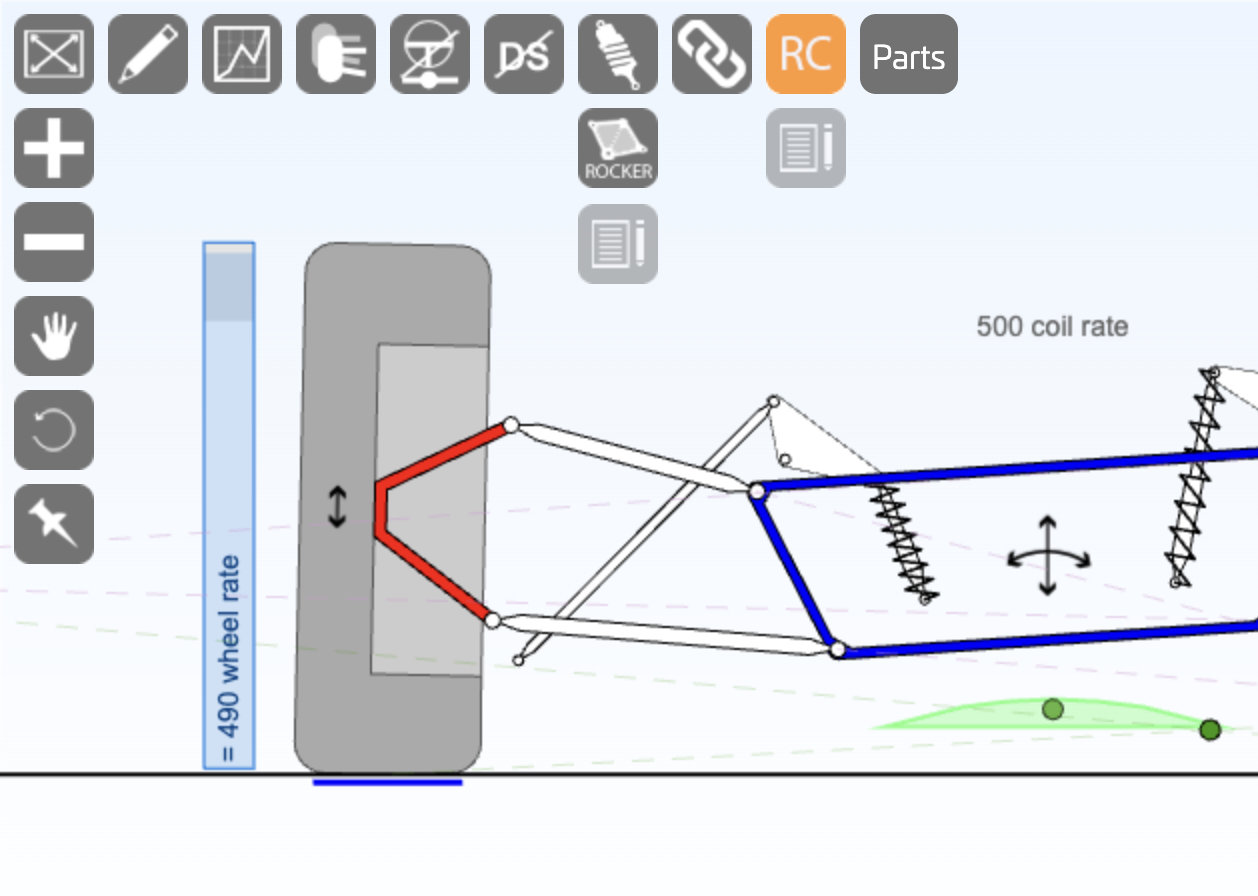
Bump steer
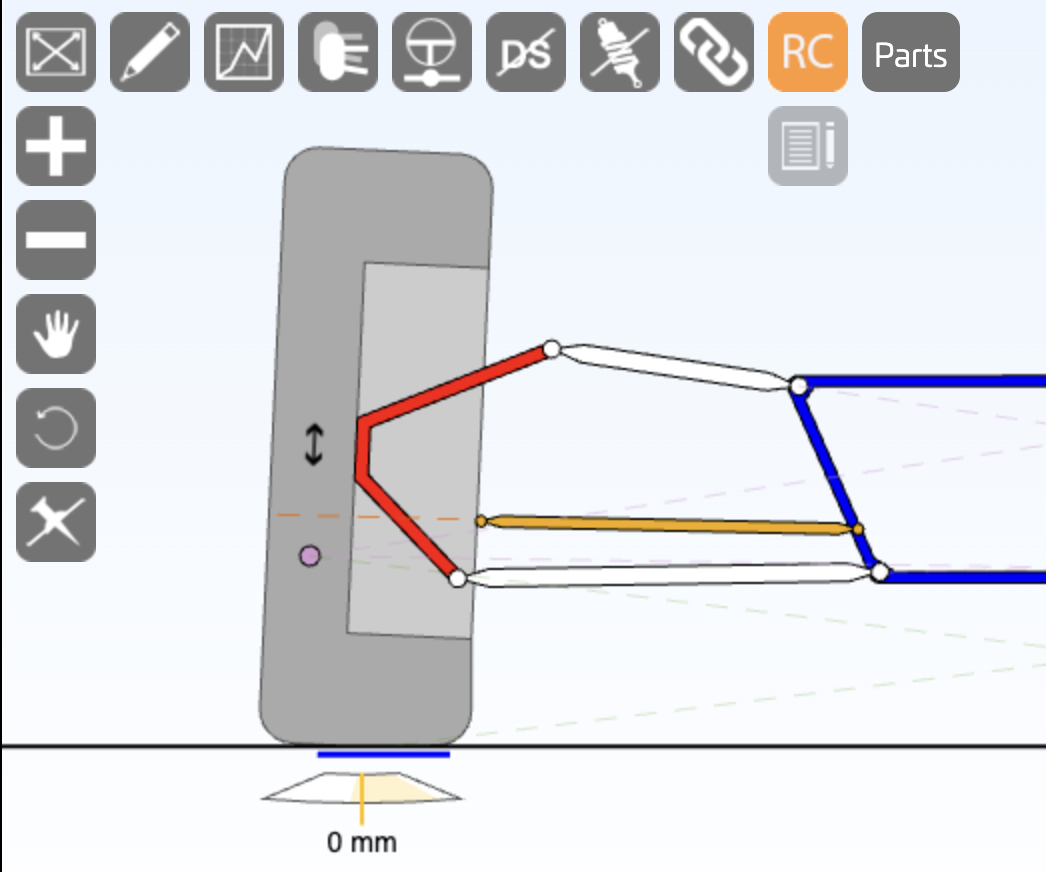
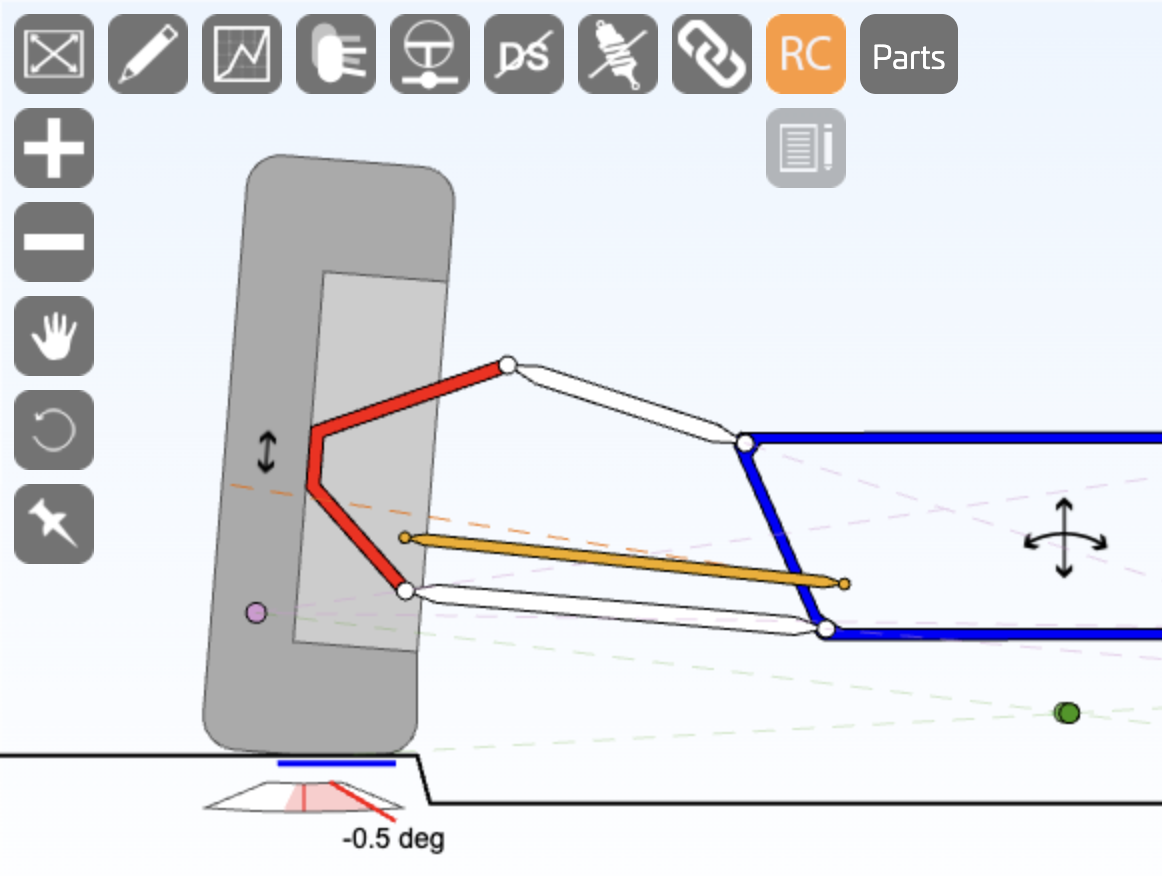
Bump steer is a very important consideration when it comes to suspension design. A car with bump steer feels awful to drive. Bump steer is when the steering tie rod forces the wheel to turn just by moving the suspension up and down.
Read https://www.racingaspirations.com/bump-steer/ for more information.
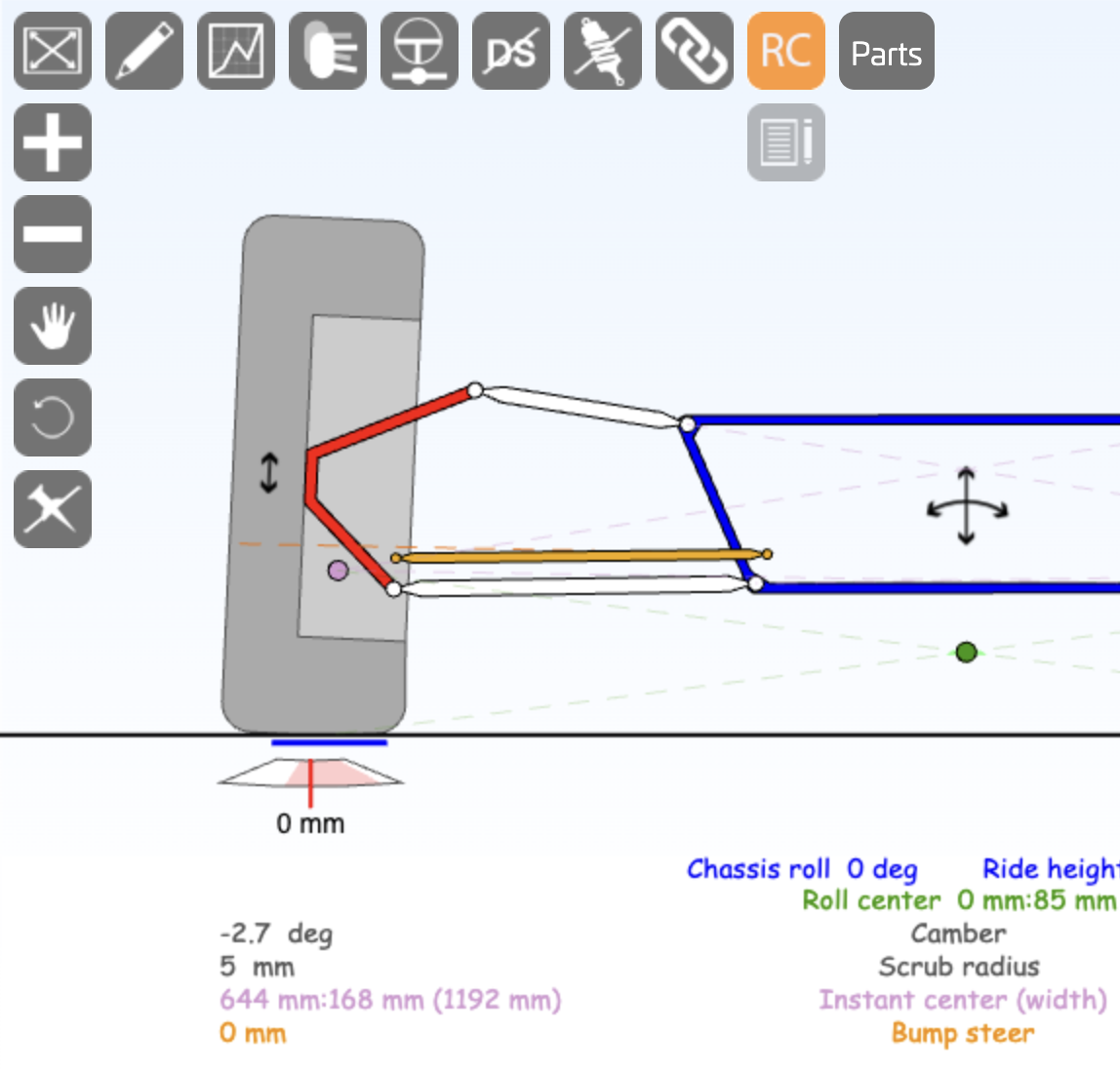 |  |  |
Steering arm length
To calculate bump steer as a steering angle, enter the length of the upright steering arm from the kingpin to where the steering tie rod attaches (in mm.)
Camber gain
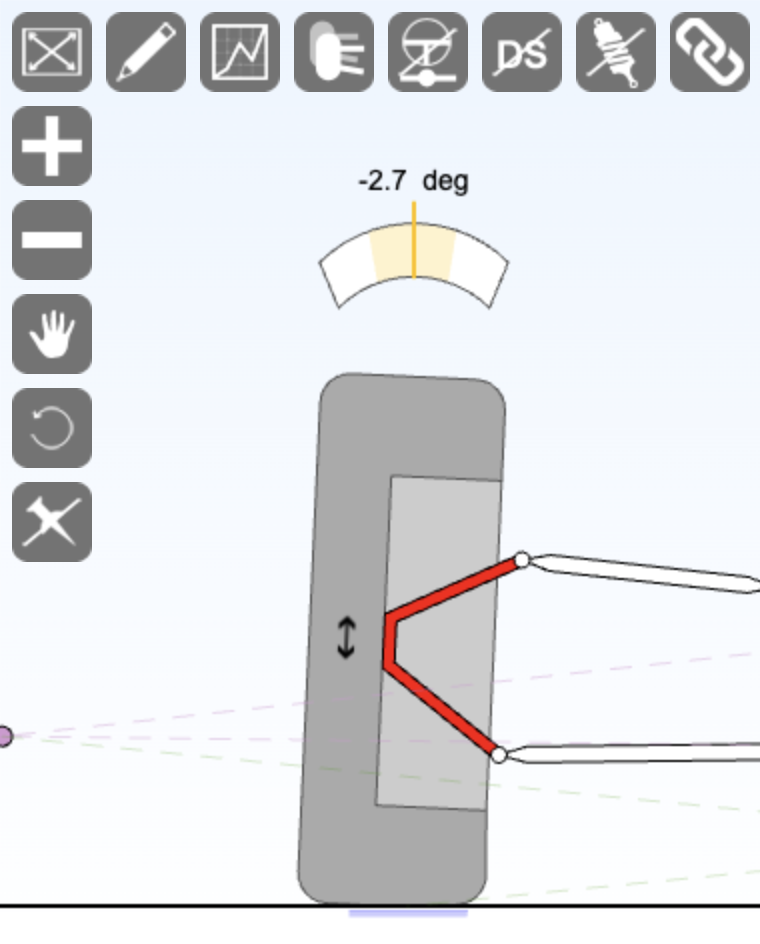
Visualise the camber gain and loss with this graph. less camber change is deemed better.
 | 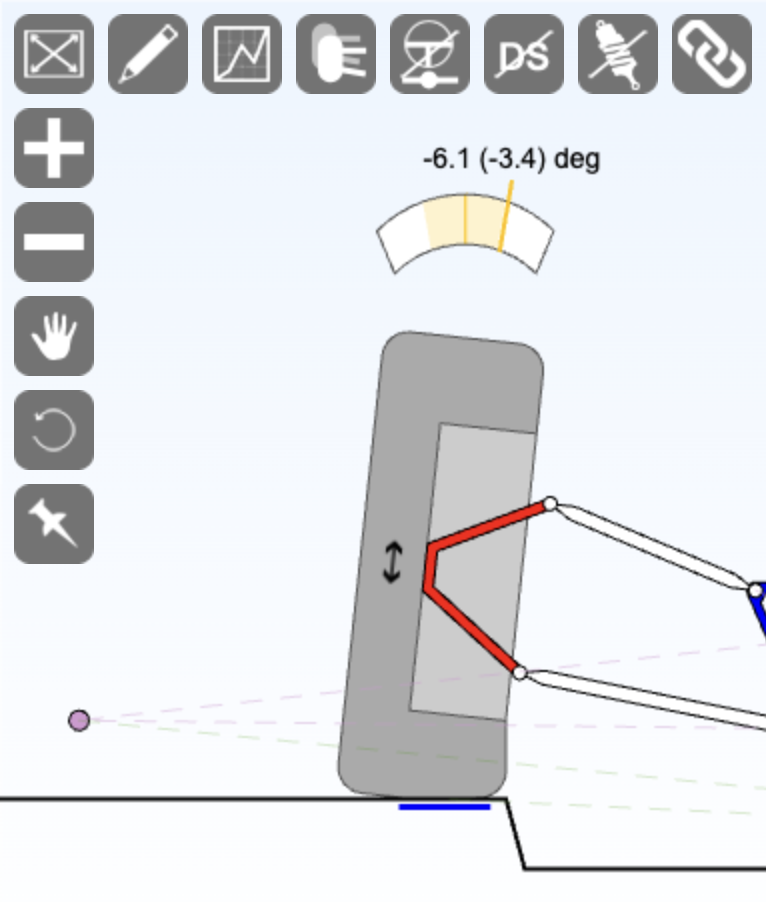 |
Scrub radius
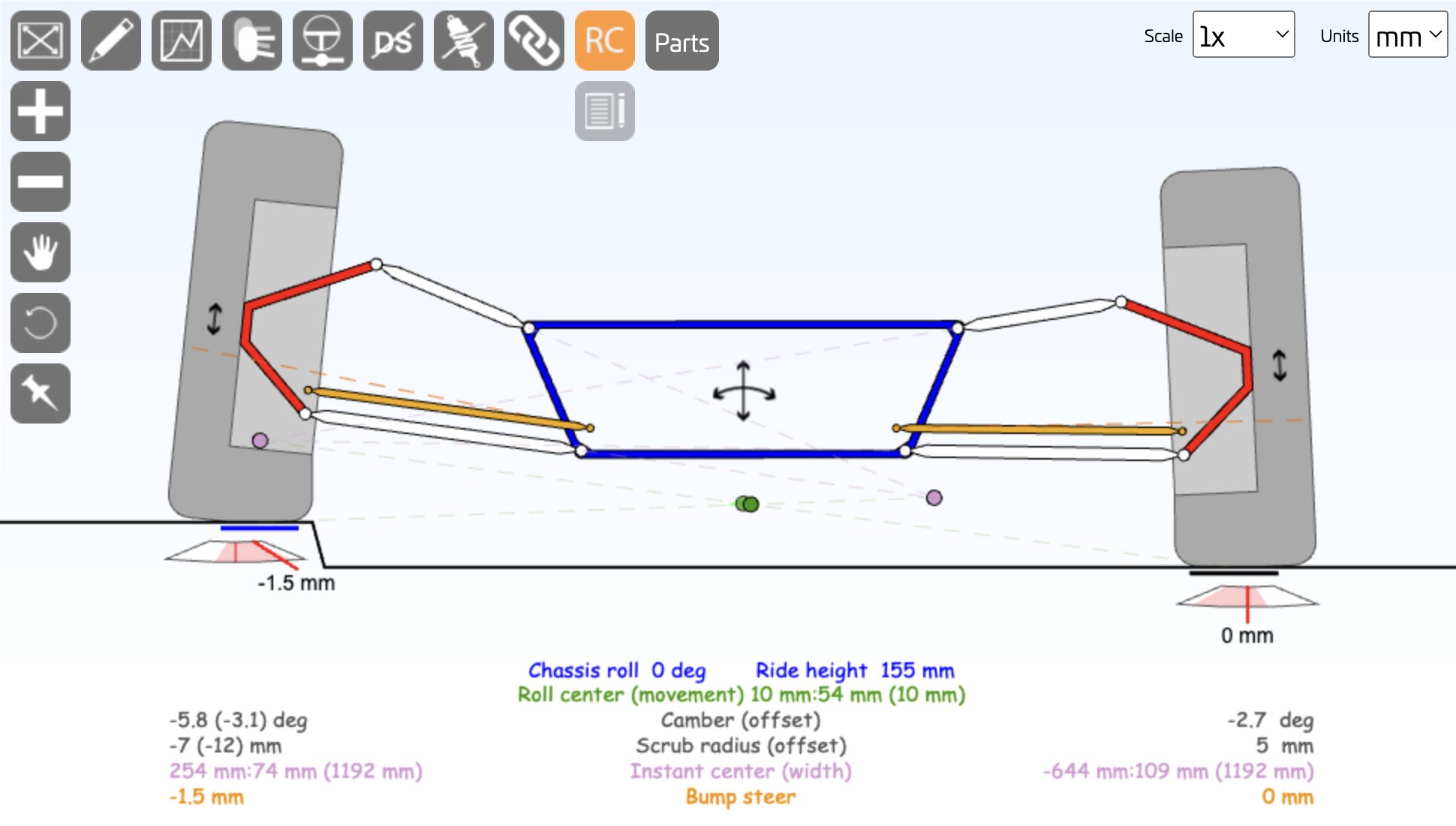
Scrub radius affects the forces acting on the suspension and whether the suspension is trying to be pushed forward or backward. There is one golden rule: Don’t switch between position and negative scrub radius when the suspension moves as is happening in this example.
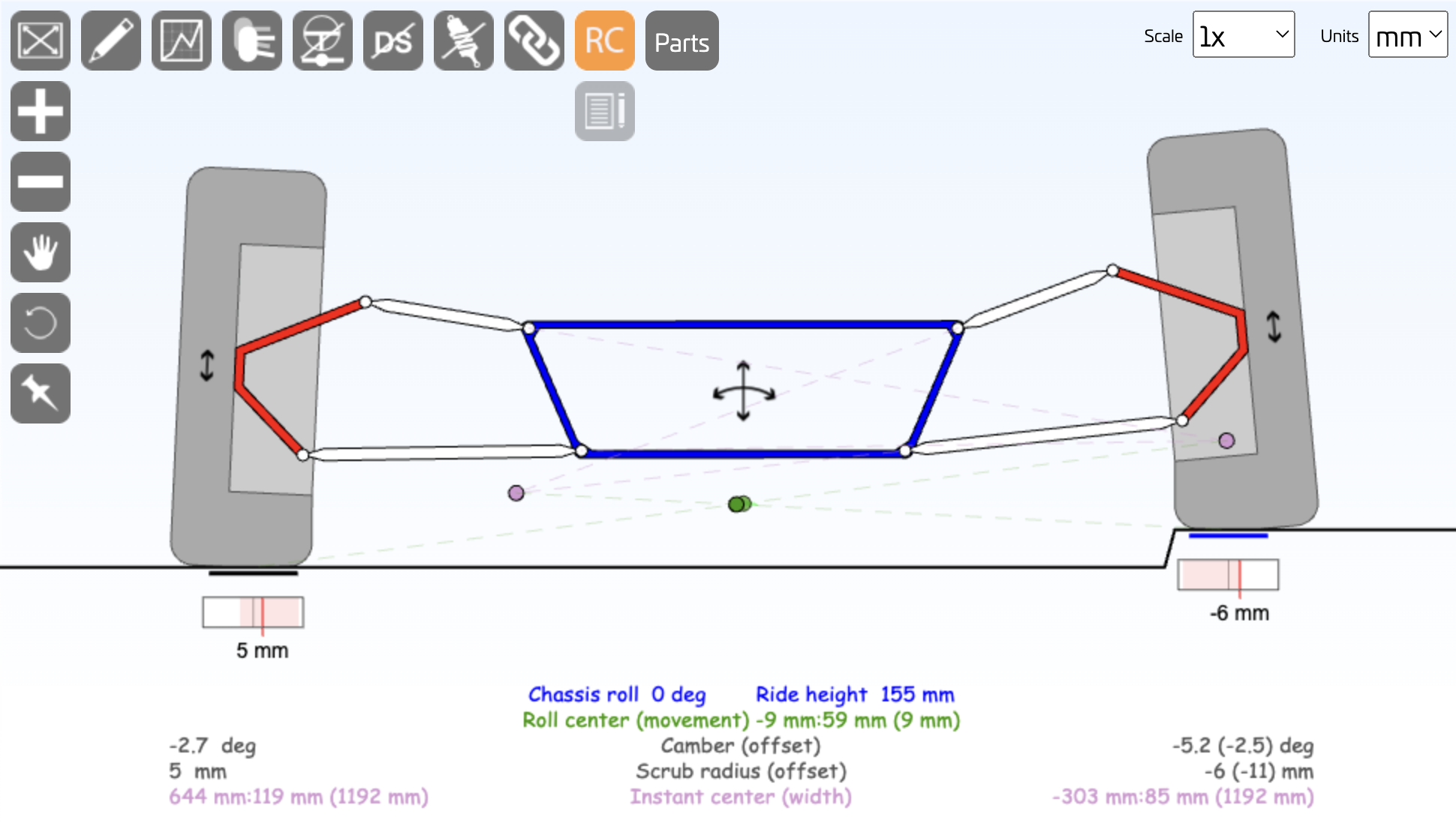
Read https://www.racingaspirations.com/scrub-radius for more information.
Tags
Sharing

Comments (2)
 |
 |
Racing Aspirations
May 31, 2025 at 4:14 am
87oemr2: You are correct.as your steering arm attaches rearward of the turning plane you should enter a negative value. |
 |
87oemr2
May 31, 2025 at 4:02 am
Can you clarify the “Steering arm length” measurement. I’m measuring for a Mcpherson strut geometry. As I’m understanding it, this is the distance in mm the outer tie rod attaches forward or in my case rearward of the “kingpin.” On a Mcpherson strut suspension this means measuring the distance from the plane/line that runs between the lower balljoint and the upper strut knuckle bolt to the outer tie rod attachment point. |